
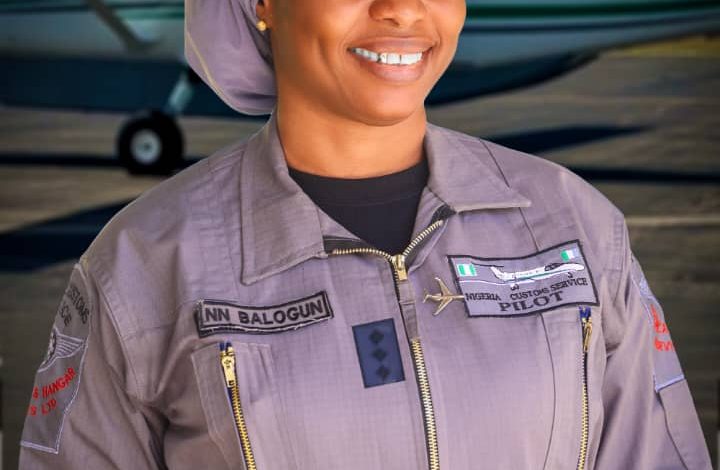
Deputy Superintendent of Customs (Pilot) Olanike Nafisat Balogun has made history as the first female pilot in the Nigeria Customs Service (NCS), charting a path of resilience and breaking barriers in aviation. Born in Kaduna and a native of Odo-Otin Local Government Area, Osun State, Balogun’s journey began in 2002 when she was recruited as a Customs Assistant to serve as a cabin crew member in the Service’s Airwing Unit.
Speaking in a recent interview, DSC Balogun reflected on her journey, sharing how her unwavering ambition and the Service’s support enabled her transformation from a flight attendant to a licensed pilot. “Staying in the Service when many of my colleagues opted for better-paying airline jobs was a tough decision, but I was determined to contribute to public service and achieve my dream of becoming a pilot,” she said.

Balogun’s career milestones include earning an Advanced Diploma in Air Ticketing and Cabin Services, a Master’s in Public Administration from Ahmadu Bello University, and eventually securing her Pilot Certification from the Flying Academy in Miami, Florida, with the NCS sponsoring her training.
DSC Balogun asserted that being the first female pilot in the NCS Airwing is credited to inspiring women within and beyond the Service never to relent in pursuing their dreams. “My role as the first female pilot in the service reflects my commitment as a woman to advancing my passionate dream as well as the operational capabilities of the NCS” she added.
As she continues to fly for the NCS, Balogun remains passionate about inspiring others, stating, “I hope my journey motivates young Nigerians, especially women, to chase their dreams and break through barriers.”
The Comptroller General of Customs, Adewale Adeniyi, in a statement commended her dedication and described her achievement as a testament to the Service’s commitment to capacity building and innovation. “Her story exemplifies what is possible with determination and institutional support,” he said.